Laptop Open, Lake View: Why Remote Workers Are Trading Tokyo Chaos for Monthly Stays in Tsuchiura
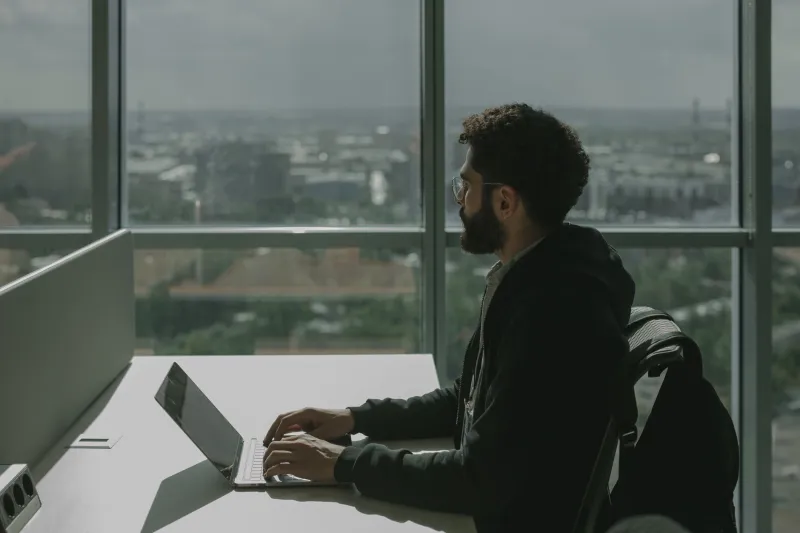
There's a particular kind of burnout that hits you somewhere around week three of a Tokyo Airbnb. The apartment is the size of a walk-in closet, the convenience store downstairs is the closest thing to a kitchen, and the city's relentless energy — which felt electric at first — has started to feel like a low-grade fever you can't shake. You're technically working. But you're not exactly thriving.
That's roughly where Marcus Webb found himself last spring. A UX designer from Portland, Oregon, Marcus had planned a three-month working trip through Japan. Tokyo was supposed to be the main event. Tsuchiura was a last-minute detour — a friend had mentioned it, he'd looked it up, and the rent was less than half what he was paying in the capital. He booked a month, mostly out of curiosity.
He stayed for eleven weeks.
"I got more done in Tsuchiura in one week than I had in the previous three in Tokyo," he said. "And I actually started cooking again. There was space. There was quiet. I didn't realize how much I needed that until I had it."
Marcus isn't alone. Tsuchiura — a mid-sized city on the western shore of Lake Kasumigaura, about an hour from Tokyo by train — has been quietly collecting a small but growing community of remote workers, digital nomads, and location-independent professionals who are choosing monthly stays over the hostel-hop or the overpriced short-term rental grind.
What a Monthly Stay Actually Looks Like Here
Tsuchiura's long-term rental market is a different world from Tokyo's. Monthly furnished apartments — often called "weekly mansions" in Japanese, though they accommodate monthly stays just fine — run anywhere from roughly $600 to $1,200 USD per month depending on size and location. That typically includes utilities and, critically, internet.
For comparison, a comparable Tokyo setup in a central neighborhood can easily run two to three times that, and you're still dealing with paper-thin walls and zero outdoor space.
In Tsuchiura, a mid-range monthly rental often means an actual kitchen, a bit of a view, and sometimes — if you're lucky and you book the right place near the waterfront — a window that frames Lake Kasumigaura like a painting you didn't commission but absolutely deserve.
Platforms like Sakura House and various local real estate agencies that cater to foreign residents have made the logistics more accessible for English speakers. It's not frictionless — some Japanese language ability or a helpful contact helps — but it's far more manageable than most Americans expect.
The Internet Situation (Spoiler: It's Fine)
This is usually the first question, and the answer is a relieved yes. Japan's fiber infrastructure is genuinely excellent, and Tsuchiura is no exception. Most monthly rentals include broadband that handles video calls, large file transfers, and the general chaos of a full remote workday without complaint.
The city doesn't have a dense co-working space scene the way Tokyo or even some mid-sized American cities do — that's worth being upfront about. There are a handful of options: a few café-style spots with reliable Wi-Fi and a tolerance for laptop campers, the occasional community center with open workspace, and at least one proper shared office space that's been quietly picking up remote worker clientele.
But here's what actually happens: most remote workers in Tsuchiura end up working from their apartments, and they find they prefer it. Without Tokyo's constant pull to be out, to be doing, to be consuming, the apartment becomes a genuine workspace rather than a place you're just sleeping between activities.
"I thought I'd miss having a co-working space," said Jenna Caldwell, a content strategist from Austin who spent two months in Tsuchiura last fall. "But I got into this rhythm where I'd work in the morning, walk to the lake at lunch, work again in the afternoon, and then figure out dinner. It felt sustainable in a way that my life back home honestly doesn't."
The Productivity Thing Is Real, But It's Not the Whole Story
Every remote worker who ends up staying longer than planned in Tsuchiura will tell you about the productivity gains. Fewer distractions, a more structured day, lower financial pressure meaning less anxiety bleeding into work hours. That's all real.
But what they tend to talk about more — after a glass of something at one of the waterfront izakaya — is the community piece. Tsuchiura is small enough that you start recognizing faces. The guy at the fish counter at the morning market. The woman who runs the coffee shop near the station who will, after your third visit, start having your order ready before you finish saying good morning. The cycling group that nods at you on the lakeside path.
It's not the instant, manufactured community of a co-working space. It's slower, and it requires you to show up consistently. But for remote workers who've spent years feeling vaguely untethered — doing their jobs from everywhere and belonging to nowhere — that slow accumulation of familiar faces turns out to mean something.
Marcus put it simply: "I started to feel like I lived somewhere. That hadn't happened in a while."
Practical Things Worth Knowing Before You Book
If you're seriously considering a monthly stay in Tsuchiura, a few things are worth understanding upfront.
The train connection to Tokyo is genuinely convenient — about an hour on the Joban Line — which means you can make day trips to the capital for meetings or just to scratch a city itch without uprooting your setup. This is a significant quality-of-life detail that often surprises people.
Groceries and daily necessities are easy. Tsuchiura has supermarkets, a covered shopping street, and local markets where fresh produce — including excellent seasonal fish from the lake region — is both abundant and affordable. Eating well here is cheaper and more interesting than it has any right to be.
Language is the honest friction point. Tsuchiura is not a tourist-heavy city, which means English signage and English-speaking service staff are less common than in Tokyo. Apps like Google Translate handle most situations fine, and locals are generally patient and genuinely helpful. But it's worth going in with realistic expectations and a willingness to fumble through interactions — which, for the record, most remote workers find charming rather than stressful after the first week.
The Shift That Happens Around Week Three
There's a pattern that remote workers in Tsuchiura keep describing, and it goes roughly like this: the first week is novelty, the second week is adjustment, and then somewhere in the third week, something settles. The city stops feeling like a destination and starts feeling like a place you live. The work gets easier. The days feel longer in the good way.
That shift — subtle as it is — is what keeps people extending their stays. It's what turned Marcus's one-month experiment into nearly three months. It's what has Jenna already planning a return trip for next spring.
Tsuchiura was never designed to be a digital nomad hub. It doesn't have the branding, the rooftop co-working spaces, or the curated expat social scene that cities market to remote workers. What it has instead is something quieter and, for a lot of people, more useful: room to breathe, a reasonable cost of living, a lake that looks different every single morning, and enough community to make you feel like your presence there actually matters.
Sometimes that's exactly what the work — and the worker — actually needs.