Same City, Different World: How Your Mode of Movement Decides Which Tsuchiura You Meet
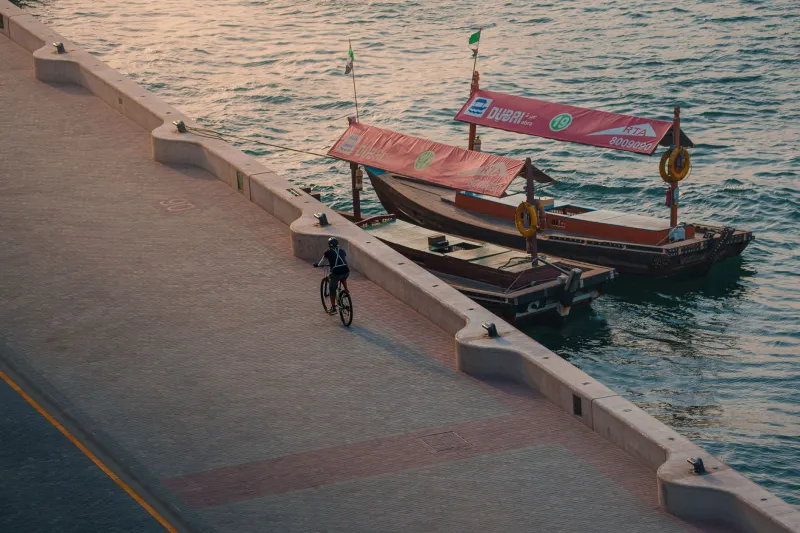
Tsuchiura is not a large city. You can cross most of it in twenty minutes by car. But spend a day on a bicycle, then spend the next morning in a kayak on Lake Kasumigaura, and you will come back with such different stories that your travel companions—if they stayed at the hotel—will think you're exaggerating.
You're not. The city genuinely multiplies depending on how you move through it. This isn't a metaphor. It's a practical reality that the people who live here and move through it daily understand intuitively, even if they've never articulated it out loud.
What Cyclists Know That Drivers Don't
Tsuchiura has a cycling infrastructure that rewards exploration—dedicated paths, relatively flat terrain around the lake, and a network of neighborhood streets that connect in ways no car-centric map makes obvious. The people who ride here regularly have developed a kind of spatial intimacy with the city that's almost impossible to acquire any other way.
Take Yuki, a graphic designer in her early thirties who's been cycling Tsuchiura for six years. Her regular route cuts through three distinct neighborhoods that most visitors never visit because they don't appear on the standard sightseeing list. One of them has a small covered shopping street—the kind that's been quietly operating since the postwar era—with a tofu shop that opens at 6 a.m. and sells out by 9. She found it by following the smell.
"You can't smell things from a car," she says, with the matter-of-fact delivery of someone stating the obvious. "You can't stop in three seconds when you see something interesting. Cycling is slow enough to notice and fast enough to cover ground."
That speed-to-attention ratio is the key variable. Cyclists in Tsuchiura operate at a pace that puts them in genuine contact with the city's texture—the transitional zones between neighborhoods, the small shrines tucked into residential blocks, the morning routines of people who live here and aren't performing for an audience.
The Paddler's Tsuchiura Is Completely Different
From the surface of Lake Kasumigaura, the city looks like a thin stripe of civilization pressed against an enormous body of water. The scale inverts. Instead of Tsuchiura surrounding the lake, the lake surrounds Tsuchiura—and everything you thought you understood about the geography reshuffles.
Keisuke, a high school teacher who kayaks most weekends, describes his relationship with the city as fundamentally changed by the years he's spent on the water. "When I walk around downtown now, I'm always aware of the direction of the lake," he says. "I know which streets lead to the water and which ones run parallel. I have a kind of internal compass I didn't have before."
But the water also offers encounters that land-based movement can't replicate. Fishermen working the early morning hours. Migratory birds using the lake as a rest stop in ways that follow seasonal patterns Keisuke has learned to read. The occasional other paddler—and the brief, strangely intimate conversations that happen between kayaks floating twenty meters apart, voices carrying easily across still water.
"You talk to people differently on the lake," he says. "There's no reason to rush. You're both just there."
For US visitors, this quality of encounter—unhurried, context-free, genuinely curious—is rare enough to be worth specifically seeking out. Kayak rentals are accessible, the lake is manageable for beginners in calm conditions, and the perspective shift is immediate and lasting.
Runners Inherit the City at Dawn
The running community in Tsuchiura is active and quietly devoted to hours that most tourists never see. The lakeside paths before 7 a.m. belong to runners in a way that feels almost territorial—not aggressively, but by simple fact of presence. They're here when nobody else is, and the city they run through is a different place.
Masako, a nurse who runs six days a week along the lake path, describes the early morning light on Kasumigaura as the main reason she hasn't switched to evening runs despite the convenience. "The water does something in the morning," she says, gesturing in a way that suggests she's tried to describe this before and found language insufficient. "It reflects differently. Everything is quieter. I've seen things at 5:30 a.m. that I've never seen at noon."
What she's describing is a temporal layer of the city that's invisible to the standard visitor. Tsuchiura at dawn is populated by a specific cast—runners, fishermen, the occasional elderly resident walking a dog, delivery workers beginning their routes. These people know each other by sight. They nod. Over months and years, they exchange words. It's a community that exists entirely in the pre-tourist hours.
For visitors willing to set an alarm, even a single early-morning run along the lakefront offers a version of Tsuchiura that no amount of sightseeing later in the day can replicate.
Hikers Find the Edges
Tsuchiura's immediate surroundings offer hiking that most visitors overlook entirely—low hills, forested paths, and routes that connect the urban core to a surprisingly rural fringe within walking distance. Hikers here tend to develop an understanding of the city's edges: where development stops, where old agricultural land persists, where the urban and rural genuinely blur.
This edge knowledge produces a different kind of local fluency. Hikers know which roadside stands appear on which days. They've found the small family-run restaurants that exist specifically because they're on a hiking route and nowhere else. They understand Tsuchiura not as a destination but as a center point surrounded by a landscape worth knowing.
Why Switching Modes Is the Real Move
The most interesting travelers in Tsuchiura—the ones who come back, or who leave with the kind of stories worth telling—tend to be the ones who don't commit to a single mode of movement. They cycle one day, paddle the next, walk at dawn on the third.
Each switch resets your frame of reference. The neighborhood you cycled through looks different from the water. The lakefront you paddled past makes more sense once you've walked it. The city accumulates in layers, and each layer requires a different speed and a different angle.
Tsuchiura isn't a city you see. It's a city you move through—repeatedly, in different directions, at different paces. That's when it starts to make sense.