Forget the Shot List: Tsuchiura's Best Light Is the Kind You Actually Feel
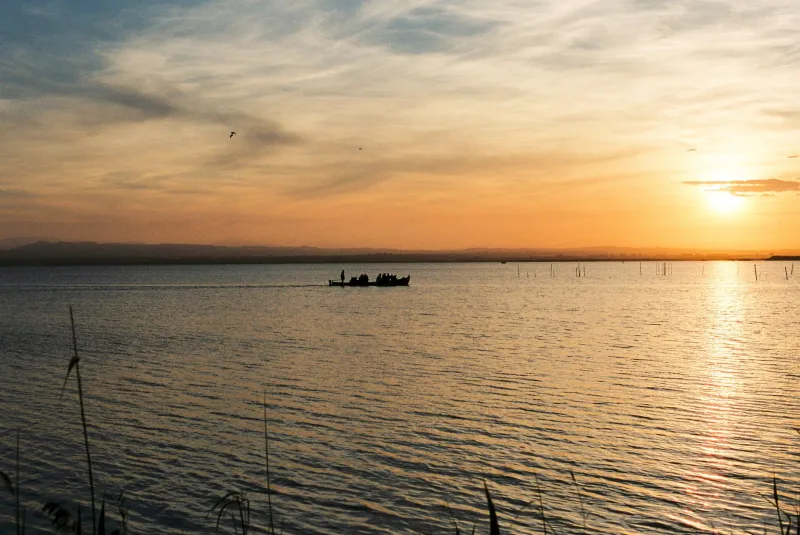
There's a version of Tsuchiura that lives on Instagram. Wide-angle shots of Lake Kasumigaura going pink at sunrise, maybe a lone fisherman silhouetted against the water, a reflection so perfect it looks fake. It's beautiful. It's also crowded, competitive, and honestly kind of exhausting to chase.
Here's what nobody's posting: the light in Tsuchiura does something genuinely strange and wonderful throughout the day, and the best of it has nothing to do with being at the right spot at 5:47 a.m. with a tripod and a wakeup alarm that makes you hate yourself. This city rewards the unhurried. And if you give it a little time, it'll show you something you won't find in anyone else's camera roll.
Why Lake Kasumigaura Light Is Different (And When It Actually Peaks)
Kasumigaura is Japan's second-largest lake, and its sheer scale changes how light behaves around it. The water surface is so expansive that it acts almost like a secondary sky—reflecting and diffusing light in ways that make even overcast afternoons feel luminous. That's not something a photo captures well. You have to be standing next to it.
Most visitors arrive for sunrise, which is fine. But the honest truth is that late afternoon—roughly 90 minutes before sunset, not at sunset itself—is when the lake turns genuinely surreal. The angle of the light skims low across the water and hits the reeds along the shoreline in a way that makes everything look slightly golden and slightly out of time. Think less "screensaver" and more "I can't believe I'm actually standing here."
If you're coming from the US, your internal clock is probably already a mess. Use it. A 4 p.m. wander along the lakeshore isn't a consolation prize—it's the move.
The Spots That Don't Make the Travel Blogs
The Fishing Harbors North of the Main Promenade
Tsuchiura's main waterfront gets the foot traffic, but walk north past the tourist-friendly stretch and you'll hit a working harbor area where actual fishing boats dock. In the late afternoon, when the boats come in and the light drops low, the combination of weathered wood, still water, and long shadows creates something that feels more like a painting than a photograph. Nobody's fighting for a spot here. You might be the only non-local in sight.
The Rice Field Roads Heading West
A short bike ride or taxi away from the city center, the agricultural land west of Tsuchiura does something magical in the hour before the sun fully sets. Flat, open fields catch the horizontal light in a way that turns ordinary rice paddies into something close to luminous. There are no designated viewpoints here, no guardrails, no posted signs. You just pick a road and walk it. The light finds you.
The Canal Streets Near the Old Town Area
Tsuchiura has a quieter network of older streets and narrow canals that most visitors skip entirely. In the morning—not at sunrise, but around 8 or 9 a.m. when the sun is still low but the day has started—the light comes through at a low angle and catches the water in the canals with this soft, flickering quality. It's the kind of light that makes you slow down mid-step. No hashtag required.
The Permission Slip You Didn't Know You Needed
American travelers, especially first-timers in Japan, tend to arrive with itineraries that are basically a checklist of photographic moments. Best viewpoint at sunrise: check. Famous bridge reflection: check. There's nothing wrong with that. But Tsuchiura is a city that genuinely rewards the unscheduled hour.
Skip the sunrise alarm once. Sleep until seven. Walk to the lake with a coffee and no agenda. The light will still be doing something interesting—it just won't be the thing everyone else is photographing. That's kind of the whole point.
Seasonal Notes Worth Knowing
Light quality in Tsuchiura shifts pretty dramatically with the seasons, and it's worth knowing what you're getting into before you go.
Spring brings a softer, hazier atmosphere—partly pollen, partly humidity starting to build—that diffuses the light beautifully. Cherry blossoms near the waterfront catch afternoon sun in a way that's almost embarrassingly gorgeous. But the real underrated window is just after peak bloom, when petals are falling and the crowds have thinned.
Summer light is harsh midday but extraordinary in the last 45 minutes before sunset. The heat haze over the lake creates an almost watercolor effect that no filter can replicate. It's hot. Bring water. Worth it.
Autumn is, genuinely, the season most photographers would pick if they knew. The angle of the sun drops lower earlier in the day, which means golden-hour quality light starts around 3 p.m. instead of 5. The foliage around the lake edges turns, and the combination of warm tones in the trees and cool tones on the water is something you'll remember for a long time.
Winter is the sleeper pick. Low humidity means the air is unusually clear, and on cold mornings, there's often a mist sitting just above the lake surface that burns off slowly as the sun rises. If you're visiting between December and February, the early morning scene at Kasumigaura is legitimately one of the most beautiful things in this part of Japan. And almost no one is there.
One Last Thing
There's a tendency, when traveling, to treat beautiful light as something you have to capture to justify experiencing. Tsuchiura has a way of quietly dismantling that instinct. Stand at the edge of the lake when the afternoon goes golden. Watch the fishermen head in. Let the light do what it does without reaching for your phone.
You can always take the photo. But the moment you're actually standing inside of—the temperature of the air, the sound of the water, the way your whole body kind of exhales—that one's yours to keep without needing a camera roll to prove it.
Tsuchiura's light hits different because it asks something of you first. Show up without a shot list, and it'll give you something better than a perfect frame.