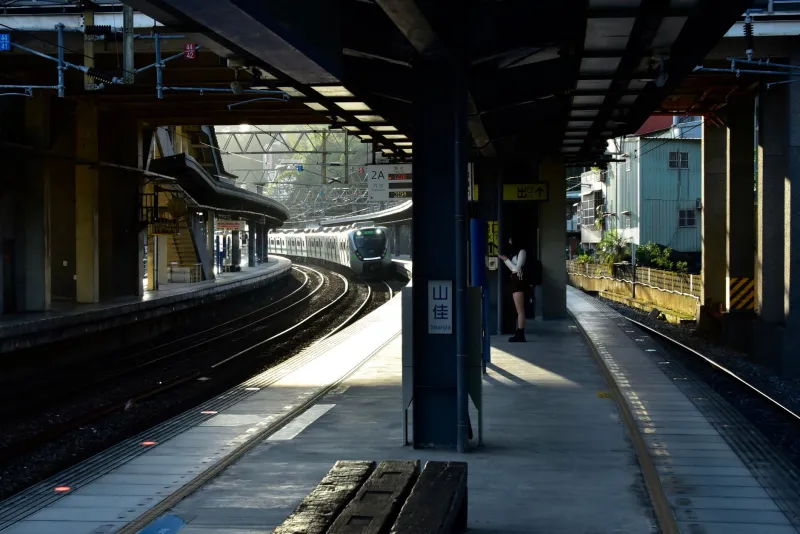
There's a moment that Tsuchiura commuters know well. It's somewhere around 6:40 PM, you're gathering your things, and someone in the Tokyo office asks if you can stick around for "just one more thing." And you — calmly, without guilt — say no. Because the 6:47 is leaving, and you're going to be on it.
That's not rudeness. That's a lifestyle.
For the Americans who've landed in Tsuchiura and started making the daily run into Tokyo on the Joban Line, one of the first surprises isn't the commute itself — it's what the commute does to the rest of their day. The train schedule, it turns out, is less of a constraint and more of a quiet enforcer of the kind of work-life separation that most people in major US cities have completely given up on.
The Timetable as a Time Management Tool
Here's the thing about commuting out of Tokyo versus commuting within it: when you're heading back to a city like Tsuchiura, you're not hopping on a subway that runs every three minutes. You're catching a specific train. And that specificity changes everything.
When there's a train at 6:47 and the next convenient one doesn't get you home until closer to 8, you start making decisions with real stakes. You stop saying yes to things that don't actually matter. You get ruthlessly efficient between 9 AM and 6 PM because the clock is genuinely ticking. And when that train pulls out of Ueno or Akihabara and the Tokyo skyline starts shrinking in the window behind you, there's a psychological exhale that subway riders never quite get.
Psychologists who study commuting behavior have long noted that longer, fixed-schedule commutes can actually function as transition rituals — a buffer between work-self and home-self. In Tsuchiura, that buffer is real, it's 45 to 60 minutes long, and it happens at a predictable time every single day. That predictability is the secret ingredient.
The Gap Between Trains Is Where Life Happens
One of the more unexpected things that Tsuchiura residents talk about is what happens in the windows between service times — not just the evening run home, but the broader rhythm of knowing when trains are and aren't convenient.
If you miss the efficient morning window, you're not stranded — but you're also not getting to your Tokyo desk by 9. So people wake up with intention. There's a natural incentive to catch the 7:15 or the 7:38, which means mornings in Tsuchiura have a structure that, weirdly, feels less stressful than the "I can leave whenever" chaos of living inside the city.
And those gaps in the evening schedule? They've quietly given rise to entire personal routines. Regulars at the lakefront running path will tell you they started running because they had 40 minutes to kill before a reasonable train. Guys who now have a serious cycling habit picked it up because the service gap on a certain day meant an extra hour in Tsuchiura with nothing on the calendar. Local izakaya owners will straight-up tell you that their early-evening crowd is made up of commuters who caught a late meeting and decided to eat well in Tsuchiura rather than grab something sad at a Tokyo station kiosk.
The gaps, in other words, became the good parts.
Accountability You Didn't Know You Were Signing Up For
There's a cultural element here that Americans often underestimate before they experience it. In a lot of US work environments — especially in tech or finance — there's an unspoken competition around who stays latest. Leaving at 6 PM can feel like a statement, and not always a welcome one.
The train schedule dissolves that entirely. When you tell your Tokyo colleagues "I've got a train," there's no argument. Nobody debates the Joban Line. It leaves when it leaves. And over time, something interesting happens: your Tokyo colleagues start to envy the clarity of it. You're not the person sneaking out — you're the person with a legitimate, immovable reason to close the laptop.
Expats in Tsuchiura who've made this commute for more than six months consistently describe a version of the same shift: they stopped feeling guilty about leaving, and they started feeling like their evenings actually belonged to them. That's not a small thing. In a culture that often valorizes overwork, having an external reason to leave — one that has nothing to do with your own willpower — turns out to be genuinely freeing.
What a Week Actually Looks Like
Picture it this way. Monday and Tuesday, you're in Tokyo, catching the efficient morning train, hitting your meetings, and making the 6:47 home. Wednesday, you work remotely from the café near the lake, and you spend the afternoon hours you'd normally waste in a pointless meeting actually finishing something. Thursday, you're back in Tokyo, but you build in a buffer and grab dinner at a spot near Tsuchiura Station before the evening crowd thins out. Friday, you're done by noon.
That's not a fantasy — that's a schedule several Tsuchiura-based remote and hybrid workers have actually landed on. The train schedule didn't dictate all of it, but it gave the week a skeleton. Something to build around. A rhythm.
And rhythm, it turns out, is the thing most people are quietly starving for after years of the open-ended, always-on grind that big city life tends to produce.
The Unexpected Social Layer
Here's a detail that doesn't make it into most relocation conversations but probably should: when you catch the same trains regularly, you start seeing the same people. The guy with the cycling kit who always has earbuds in. The woman who reads actual paperback novels. The group of salarymen who've clearly been doing this commute for 15 years and have a whole silent social contract worked out.
For Americans used to the anonymity of urban commuting, there's something quietly grounding about it. You're not friends, exactly. But you're regulars. And regulars, over time, become a kind of low-key community — the kind you didn't have to try to build.
Tsuchiura has a lot of that energy. The city rewards showing up consistently. The train schedule just gives you a reason to show up at the same time, in the same place, over and over again — which is, when you think about it, exactly how routines become lives.
So, Is It for Everyone?
Honestly? No. If you need to be in Tokyo past 9 PM multiple nights a week, or your job doesn't allow for any flexibility in arrival time, the math gets harder. And there are definitely days when missing a train by two minutes feels like a minor personal catastrophe.
But for the growing number of people who've landed in Tsuchiura and figured out how to make the Joban Line work for them rather than against them, the commute isn't the trade-off. It's the whole point. The schedule that looks like a limitation from the outside is, from the inside, one of the best things about living here.
The 6:47 doesn't just take you home. It tells you when home starts.