Why Burned-Out Americans Keep Ending Up at This Japanese Lake — And Never Wanting to Leave
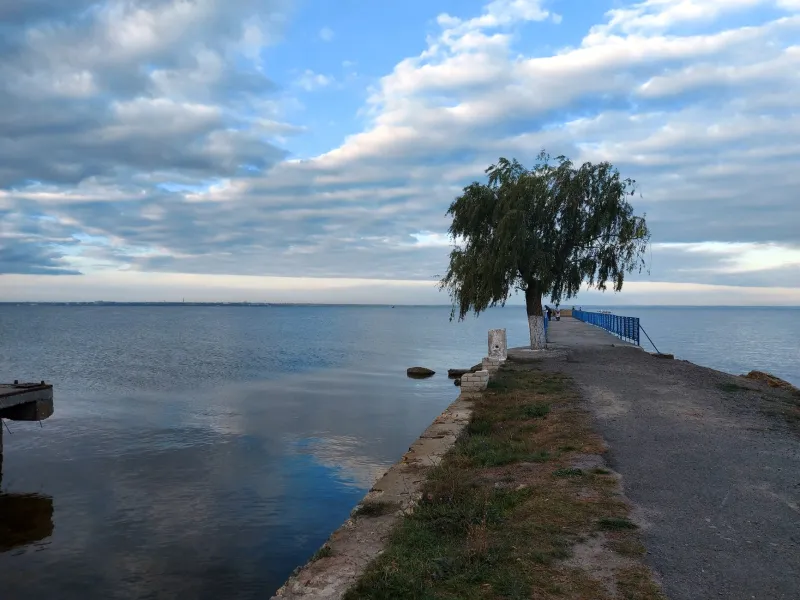
Sarah, a UX designer from Austin, didn't plan on staying in Tsuchiura for three weeks. She booked four nights. "I kept pushing my return train to Tokyo," she says, laughing a little like she still can't fully explain it. "Something about being near that lake just... turned the volume down on everything."
She's not alone. Quietly, without a major marketing push or a viral TikTok moment, Tsuchiura has become the kind of place that Americans stumble into — often on their way somewhere else — and end up treating like a long exhale they didn't know they needed. The city sits on the western shore of Lake Kasumigaura, Japan's second-largest lake, about an hour from Tokyo by train. It's not flashy. It doesn't have the cultural weight of Kyoto or the sensory overload of Osaka. What it has is something harder to package: a specific, almost physiological sense of calm.
So what's actually going on here? We talked to American visitors, remote workers who've set up temporary shop in the city, and local wellness practitioners to figure out why this particular place keeps doing what a week in Bali or a digital detox retreat can't.
The Water Does Something Real
Environmental psychologists have a term for it: blue space. Research out of the UK and Europe has consistently shown that proximity to water — lakes, rivers, coastlines — reduces cortisol levels, lowers heart rate, and improves mood in ways that green space alone doesn't always achieve. Lake Kasumigaura, which stretches across more than 167 square kilometers, isn't just a pretty backdrop. It's doing neurological work on the people who spend time near it.
"The lake is the first thing I see in the morning when I open my guesthouse window," says Marcus, a freelance developer from Portland who spent six weeks working remotely from Tsuchiura last spring. "I didn't realize how much I needed a horizon line until I had one again. In the city, your eyes never get to rest at a distance. Here, they do."
Local wellness practitioner Yuki Matsumoto, who runs a small mindfulness studio near the waterfront, says she's noticed a pattern with American clients over the past few years. "They arrive tense. Their shoulders are up here," she says, gesturing toward her ears. "By the third day near the lake, something shifts. It's not dramatic. It's just... quiet happening."
That quietness is a feature, not a bug. Tsuchiura's waterfront doesn't come with jet skis and beach bars competing for your attention. It comes with herons, cycling paths, and the occasional fisherman who's been doing the same thing in the same spot for decades. The stimulation is low. The restoration is high.
Moving Slow Is the Whole Point
One of the counterintuitive things Americans often discover in Tsuchiura is that the activities that feel the most healing aren't the ones that involve doing the most. The city's cycling culture — built around the flat, scenic paths that hug the lakeshore and extend into the surrounding countryside — has become a genuine draw for visitors who arrive expecting to sightsee and leave having had something closer to a moving meditation.
"I'm a spin class person back home," admits Jordan, a marketing director from Chicago who visited Tsuchiura during a two-week Japan trip. "I thought easy lake cycling would feel boring. Instead it felt like the first time in years I was exercising without trying to optimize something. I wasn't tracking my pace. I was just... riding."
There's science behind this too. Low-intensity, repetitive physical movement — the kind you get on a flat bike path with no traffic and a lake on one side — activates what researchers call the default mode network, the brain state associated with creative thinking, emotional processing, and genuine rest. It's the mental equivalent of a long shower where all your best ideas show up. Tsuchiura, almost accidentally, has built an infrastructure that triggers this state on a daily basis.
Kayaking on the lake offers a similar effect. The rhythm of paddling, the closeness to the water's surface, the absence of notifications — it's not adventure tourism. It's something closer to floating therapy with better scenery.
Community as a Wellness Strategy
Here's the part that's harder to put on a wellness brochure but might matter the most: Tsuchiura has a community feel that a lot of American visitors find disorienting at first, then deeply comforting.
Local markets, neighborhood festivals, the easy friendliness of izakaya regulars who'll gesture at the empty stool next to them — these aren't manufactured experiences designed for tourists. They're just how the city operates. And for Americans who've been running on the fumes of remote work and social media connection, actual human community turns out to be surprisingly potent medicine.
"I ate dinner alone every night for the first week because I was in 'vacation mode' and thought I was supposed to explore independently," Sarah from Austin admits. "Then someone at a ramen counter just started talking to me through Google Translate, and we ended up sharing a bottle of sake for two hours. I slept better that night than I had in months. I think I was just... lonely. And I hadn't admitted it."
Matsumoto sees this regularly. "Americans come here carrying a lot," she says. "Not just work stress. Isolation stress. The lake and the cycling help the body. But it's the community — being around people who aren't in a hurry, who make space for you — that helps something deeper."
Why Tsuchiura Specifically, Though?
Fair question. Japan has other lakes. It has slower cities. It has cycling culture and onsen and good food. So why does Tsuchiura keep coming up in these conversations?
Part of it is accessibility — the proximity to Tokyo means you can be here in under an hour without a domestic flight or a complicated train transfer. Part of it is scale — the city is big enough to have real infrastructure but small enough that you don't feel anonymous. And part of it is something less tangible: Tsuchiura doesn't feel like it's performing for you. It's not a tourist destination doing its best impression of authenticity. It's just a city that happens to sit next to one of Japan's most beautiful lakes, doing what it's always done.
For burned-out Americans conditioned to consume experiences rather than inhabit them, that distinction turns out to matter enormously.
"Every place I went in Japan before Tsuchiura felt like I was watching a movie," Marcus says. "Beautiful, but I was outside of it. Here I felt like I was actually in my own life for the first time in a while. Which sounds dramatic, but that's the only way I can describe it."
So What Do You Actually Do?
If you're considering a Tsuchiura reset — and based on the number of Americans quietly extending their stays, you probably should be — the playbook is simpler than you'd think. Get a bike and ride the lakeshore path in the morning before the day fully wakes up. Find a local market and buy something you don't entirely recognize. Sit at an izakaya counter instead of a table. Watch the lake at dusk when the light goes orange and the water goes still.
Don't fill every hour. That's the whole point.
Tsuchiura won't fix your job or your inbox or whatever's been grinding you down. But it has a genuinely unusual ability to remind you what it feels like to be a person again rather than a productivity metric. And sometimes that's the reset that makes everything else possible.
The lake will be there. Take your time getting to it.